


The two most powerful men in 1961, President John Kennedy of the United States and Premier Nikita Khrushchev of the Soviet Union, met for a conference meeting on the 4th of June in Vienna, Austria.
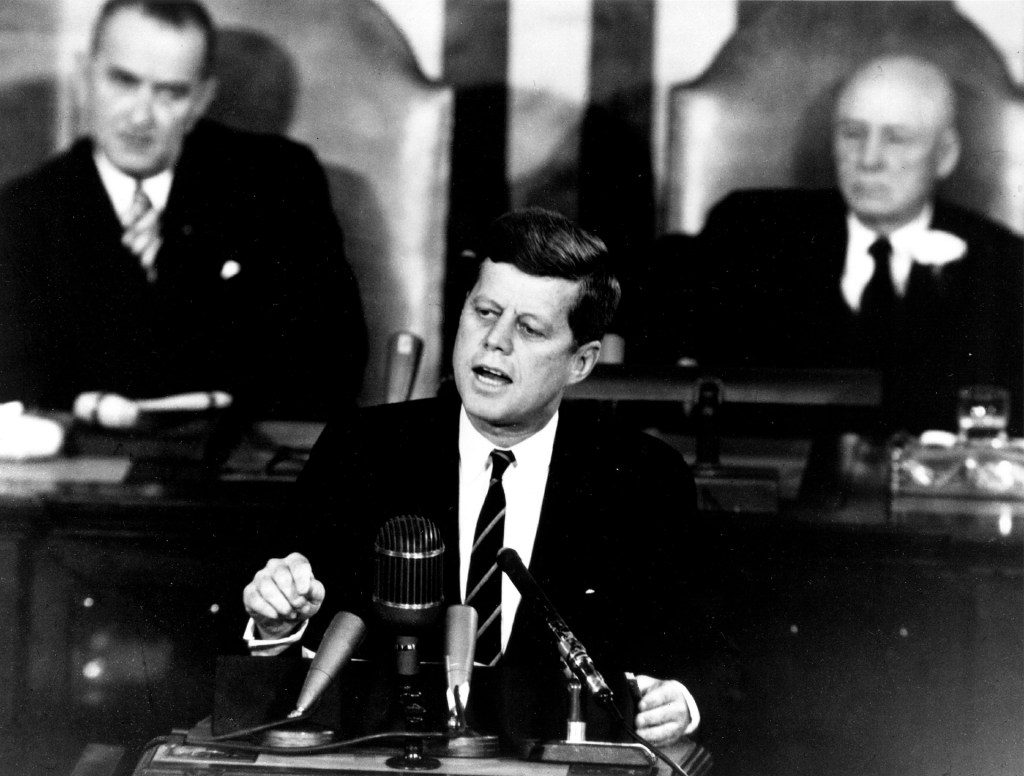
Kennedy and Khrushchev’s first meeting was at the Vienna summit. Their communication began with Khrushchev sending a congratulation message to Kennedy on his presidential election victory in November 1960. He stated that he hoped for better relations between the U.S. and USSR.
In February 1961, Kennedy sent a letter suggesting conferences between the two leaders. In the meetings, they would exchange their views on how they could work out their interstate conflicts. Despite the animosity between the two leaders, he advised Khrushchev to accept the summit proposal. Preparations began for the official meeting even with the cold war rivalries between the two superpowers increasing rapidly.
The Berlin Question
By 1961, there was a lot of emigration from East to West Berlin. The German Democratic Republic leader, Walter Ulbricht, argued with Khrushchev to close the border between the two sections of the city. He claimed that the western powers would make East Berlin more unstable. During the Vienna meetings, the main agenda was to discuss and agree on whether or not the U.S. would allow a separate peace treaty with Berlin. After the meeting, Khrushchev continued to uphold the rights of the new German socialist republic and increased the Soviet defence budget.
The Laos Question
Laos was a small landlocked country in Southeast Asia that struggled to maintain its independence. To set up a neutral government, a ceasefire arrangement before the negotiation was required. If not, communists would continue fighting to acquire favourable terms at the peace conference. After the violation of the ceasefire, the Vienna Summit talk led to President Kennedy explaining to Khrushchev that U.S. allies with Southeast Asian Treaty Organization did not want communist to take over Laos. They agreed to both cease the conflicts and worked for negotiations to obtain a neutral government in the South East Asian country.
The Invasion of the Bay of Pigs
In 1961, a few Cuban exiles opposed Fidel Castro’s Cuban Revolution, Castro felt that the U.S. helped the Cuban exiles acquire freedom from his dictatorship. It brought changes in relationship between the Soviet Union, Cuba, and the United Nations. Kennedy mentioned the issue to Khrushchev. In the Vienna summit, the U.S. and USSR would communicate and come up with a remedy of the conflicts.
Despite both leaders not coming into a concrete agreement, they were pleased they were able to meet in Vienna.
 Online Hotel Reservation